


The History of Autoflowers
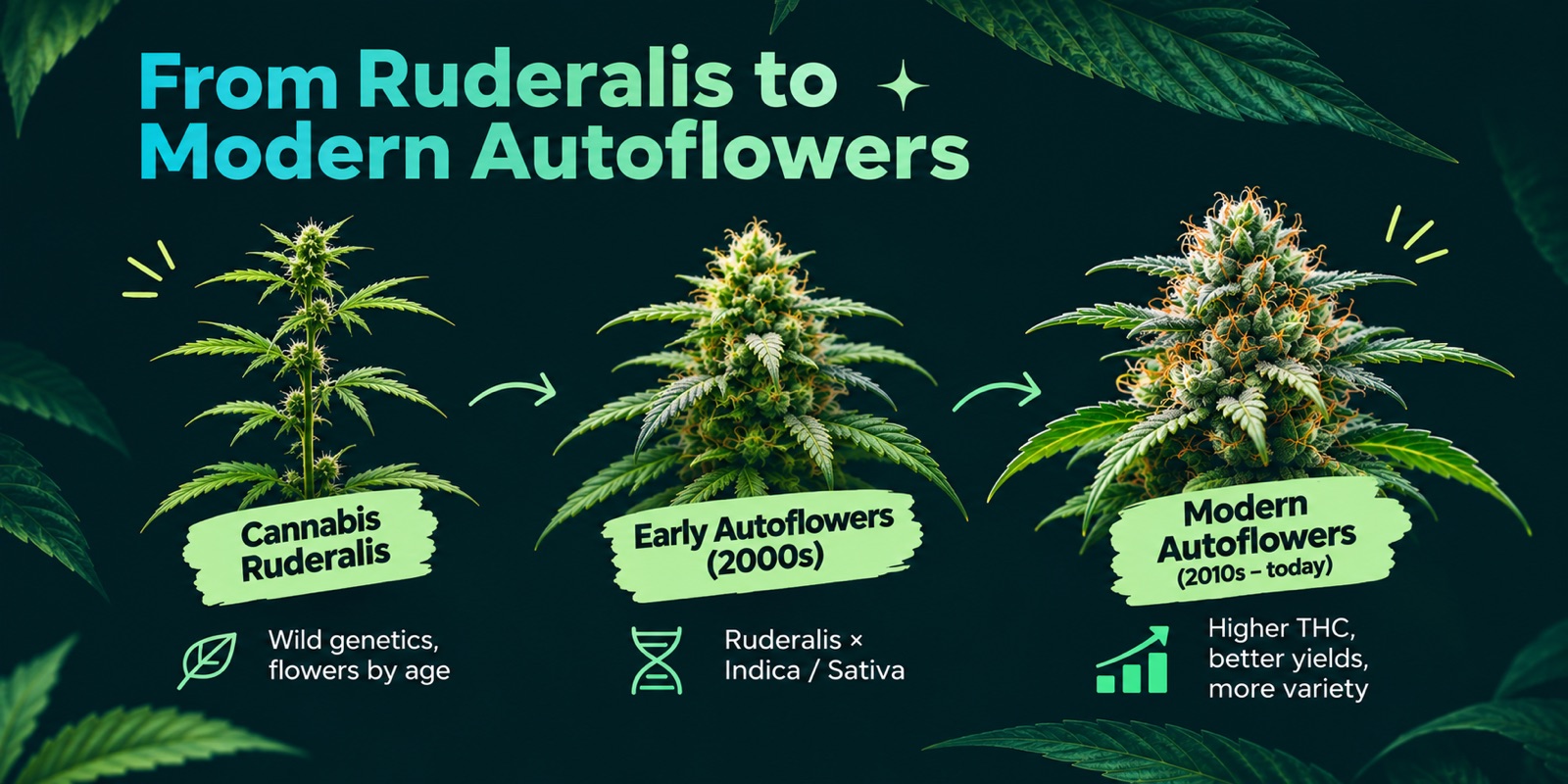
Autoflowers owe their existence to Cannabis ruderalis, a wild variety of cannabis that adapted to short summers. It evolved to flower regardless of daylight hours.
The first commercial autoflowers appeared in the early 2000s. Back then, they couldn't quite compete with photoperiod strains in terms of potency and yields. But breeders didn't stand still! Today, modern autoflowers can hold their own against photoperiod strains and have become favorites among many growers.
How Does Autoflowering Work?
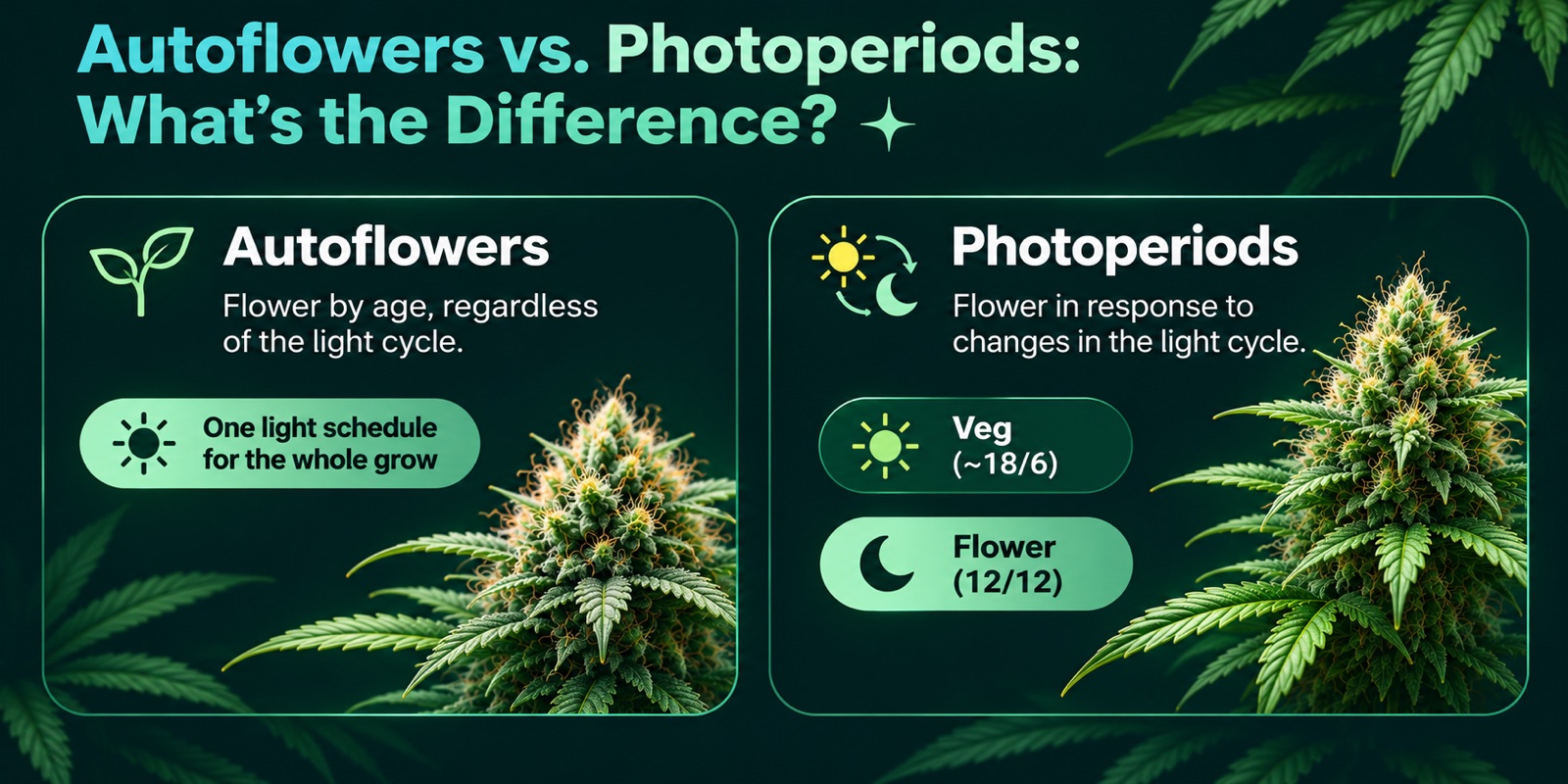
Autoflowering is built into a plant's genetics, with flowering triggered primarily by age. Unlike photoperiod strains, autoflowers don't need shorter days to start blooming.
That's why growers often use light schedules such as 20/4 or 24/0, giving plants more light during their relatively short life cycle. Of course, growth speed still depends on the strain's genetics and environmental conditions.
Benefits of Autoflowering Seeds
The biggest advantages of autoflowers are their relatively short life cycle and the fact that flowering doesn't depend on daylight hours.
Many growers love not having to worry about changing the light cycle like they would with photoperiod strains! Plenty of autoflowers also stay compact, which can be a nice bonus for home growers. Of course, there are some pretty large hybrids out there too. Thanks to modern breeding, there's a huge variety to choose from, so you can find exactly what you're looking for!
Autoflowering vs. Photoperiod Seeds: What’s the Difference?
We've already touched on this, but let's make it crystal clear!
The main difference is how flowering begins. Autoflowers start flowering as they mature, while photoperiod strains respond to changes in daylight hours.
Autoflowers often have a shorter overall life cycle, while photoperiod plants can stay in the vegetative stage for longer. That's one reason photoperiod strains often have the potential to produce larger yields.
Autoflowering vs. Feminized Seeds: Are They the Same Thing?
Not quite! These terms describe two different characteristics of a seed.
Autoflowering determines when a plant starts flowering, while feminization determines how likely it is to develop into a female plant. That means a strain can be both autoflowering and feminized at the same time. At AlphaFem Seeds, we offer only feminized seeds, including both autoflowering and photoperiod varieties. Enjoy!
What Types of Autoflowering Strains Are There?
Oh, where do we even begin? There's so much variety!
Modern autoflowers come in Indica-dominant, Sativa-dominant, and hybrid varieties. They differ in cannabinoid content (such as THC and CBD), terpene profiles, aromas, and appearance.
Autoflowering itself doesn't determine how potent a strain is or what it tastes like.
Are Autoflowers Weaker Than Photoperiod Strains?
You've probably heard this one before! And while there's some history behind this myth, things have changed quite a bit.
Early autoflowers often had lower THC levels and yields than photoperiod strains. But modern breeding has come a long way, and today there are autoflowering hybrids with impressively high THC levels.
So, when comparing potency, it's better to look at the characteristics of individual strains rather than just their flowering type.
How to Choose the Right Autoflowering Seeds
The process is simple and works for just about anyone! Start by asking yourself a few questions.
Here are the main things to consider:
- Genetics: Indica, Sativa, or hybrid?
- THC and CBD: Which cannabinoids are you interested in, and at what levels?
- Aroma and flavor: Sweet, fruity, citrusy, piney, or earthy?
- Strain characteristics: Expected height, flowering time, and potential yields.
- Seedbank: Brand reputation, genetic quality, and customer reviews. (Spoiler alert: you've already found your seedbank! ♥)
How to Store Feminized Seeds Properly
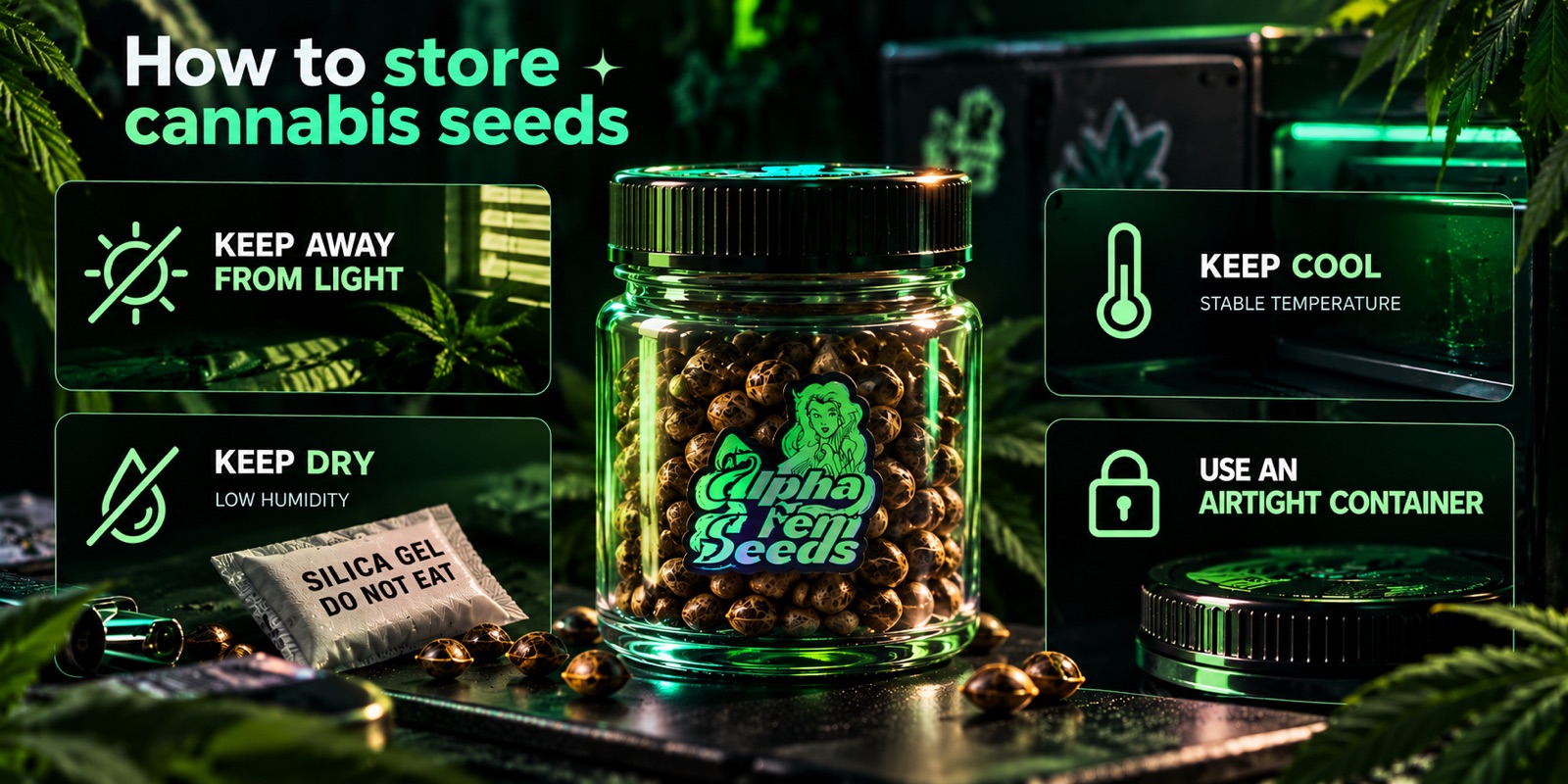
Proper storage matters, even with the highest-quality seeds, because it affects germination. Here are a few simple rules:
- Darkness. Keep seeds away from direct sunlight, as light can affect their quality.
- Cool temperatures. Avoid heat and sudden temperature changes.
- Low humidity. Too much moisture can cause mold and reduce seed quality.
- Airtight packaging. This helps protect seeds from moisture and changes in their surroundings.
With proper storage, quality seeds can last for several years, although their germination rate gradually declines over time. We recommend storing them for no longer than 2–3 years.